
Nova Scotia Class 5 Driving Test
Parts 3

A Class 5 license in Nova Scotia, Canada, is a type of driver’s license that allows the holder to operate a passenger vehicle, such as a car, under normal road conditions. To obtain a Class 5 license in Nova Scotia, an individual must pass a written knowledge test, a vision test, and a practical driving test. They must also fulfill other requirements, such as minimum age, residency, and liability insurance. Additionally, holders of a Class 5 license in Nova Scotia may be subject to certain restrictions and conditions, such as a curfew, a limit on the number of passengers they can carry, and a ban on using handheld electronic devices while driving.
57
Created on By canadiandrivingtest

Nova Scotia Class 5 Driving Test Parts 3

1 / 30

You should, under all conditions, drive at a speed which will allow you to ________.

2 / 30

On a roadway where traffic is moving in both directions, what position must you be before turning left?

3 / 30

When may you lend your driver's licence?

4 / 30

When entering a freeway you should ______.

5 / 30

Under which of the following conditions is it dangerous and unlawful to make a "U" turn?

6 / 30

Before moving your car from a parked position, you should _______.

7 / 30

Upon approaching a stop sign, a driver must ________.

8 / 30

When 15 or more Demerit Points have accumulated on a record, the driver's licence is suspended _______.

9 / 30

When a red signal light with a green arrow is shown at an intersection it means _______.

10 / 30

If you are involved in an accident in which someone is injured you must _________.

11 / 30

A driver may be required to attend an interview and re-examination of his driving ability _________.

12 / 30

If the signal light changes from green to amber as you approach an intersection, what should you do?

13 / 30

When the driver of another vehicle is about to overtake and pass your vehicle, you must ________.

14 / 30

The Ministry of Transportation and Communications may suspend a licence after a 9 Demerit Point interview _______.

15 / 30

A flashing red signal light at an intersection means ______.

16 / 30

When a truck becomes disabled on the highway, where the speed limit is in excess of 60 km/h, flares or reflectors must be placed approximately what distance ahead of and to the rear of the disabled vehicle?

17 / 30

A flashing blue light mounted on a motor vehicle indicates ________.

18 / 30

When a right turn against a red signal light is permitted, what does the law require you to do before entering the intersection and making the turn?

19 / 30

Should your right wheels drop off the roadway, what is the best way to get back on the roadway?

20 / 30

At 15 Demerit points, your licence is suspended, after 30 days, the number of points on the driver's record is ________.

21 / 30

When descending a steep hill, an excellent safe-driving practice is to _________.

22 / 30

A " School Bus" with red signal lights flashing is stopped on a highway that has no median strip. What does the law require you to do when meeting or overtaking the bus?

23 / 30

A flashing green light at an intersection, where turns to the left and right are permitted, means _________.

24 / 30

Are drivers responsible for their passengers buckling up?

25 / 30

When it is safe to do so, passing other vehicles on the right side ________.

26 / 30

When selling a motor vehicle to another person, you, the seller, should ________.

27 / 30

Which of the following penalties can the court impose on a person convicted of driving 50 km/h (30 m.p.h.) or more over the speed limit?

28 / 30

A person whose driver's licence is under suspension may ________.

29 / 30

How soon after a licensed driver changes his/her name or address is he/she required to notify the Ministry of Transportation and Communications?

30 / 30

When a streetcar is stopped to take on or discharge passengers, where there is no safety zone, what does the law require you to do before passing the streetcar?

Your score is

The average score is 74%

0%

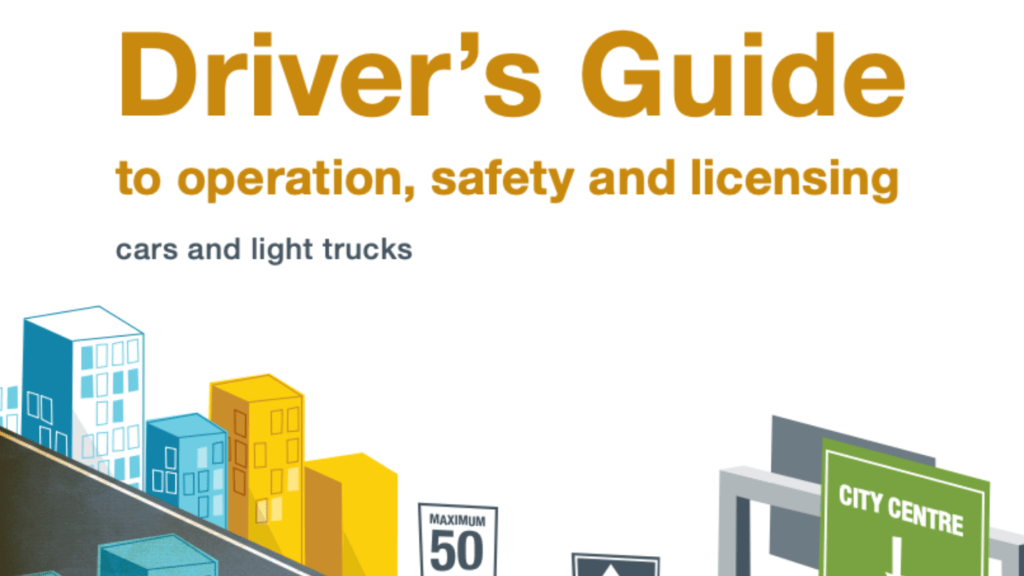
Driver's Handbook

A Class 5 license in Nova Scotia, Canada, is a type of driver’s license that allows the holder to operate a passenger vehicle, such as a car, under normal road conditions. To obtain a Class 5 license in Nova Scotia, an individual must pass a written knowledge test, a vision test, and a practical driving test. They must also fulfill other requirements, such as minimum age, residency, and liability insurance. Additionally, holders of a Class 5 license in Nova Scotia may be subject to certain restrictions and conditions, such as a curfew, a limit on the number of passengers they can carry, and a ban on using handheld electronic devices while driving.

Watch our Videos

A Class 5 license in Nova Scotia, Canada, is a type of driver’s license that allows the holder to operate a passenger vehicle, such as a car, under normal road conditions. To obtain a Class 5 license in Nova Scotia, an individual must pass a written knowledge test, a vision test, and a practical driving test. They must also fulfill other requirements, such as minimum age, residency, and liability insurance. Additionally, holders of a Class 5 license in Nova Scotia may be subject to certain restrictions and conditions, such as a curfew, a limit on the number of passengers they can carry, and a ban on using handheld electronic devices while driving.

Leave a Comment

Your email address will not be published. Required fields are marked *

Scroll to Top